
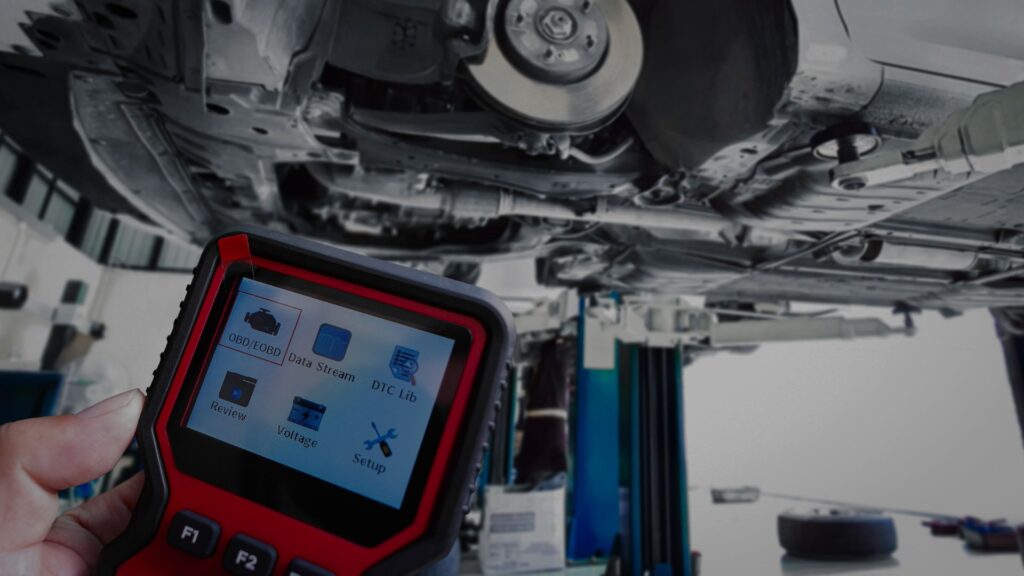
Some Fault Codes Point to the Symptom, Not the Cause
In a busy workshop, it is easy to assume that a fault code has given you the answer. In reality, many fault codes only point to the symptom the system has detected, not necessarily the root cause of the problem.
That distinction matters.
A technician may scan a vehicle, read the code description, and be pointed toward a sensor, circuit, or system. But in many cases, that code is only the starting point. The real issue could lie elsewhere, and that is where diagnostic time starts to disappear.
What a fault code is actually telling you
A fault code is the vehicle’s way of reporting that something is outside expected parameters. It may tell you which system noticed the problem, or what condition triggered the warning, but it does not always explain why that condition happened.
For example, a code may suggest a sensor fault, but the actual cause could be:
- damaged wiring
- poor connection or corrosion
- a voltage issue
- an air leak
- a mechanical problem
- another component affecting the system reading
This is where garages can lose time. The code gives a direction, but not always the correct destination.
Why technicians get led in the wrong direction
The wording of a fault code can sometimes make a problem look more direct than it really is.
A code description might appear to identify a failed component, but replacing that part without deeper checks can lead to:
- wasted labour time
- unnecessary parts replacement
- repeat visits
- technician frustration
- reduced workshop efficiency
This is especially common on awkward faults, intermittent issues, or jobs where one problem triggers a chain of misleading symptoms.
In other words, the code may be accurate in what it reports, but incomplete in what it explains.
The difference between a clue and a diagnosis
This is one of the most important distinctions in vehicle diagnostics.
A fault code is a clue.
It is not always a diagnosis.
The code tells you where to begin looking, but the real work often starts after the scan. That means considering:
- what the customer reported
- whether the symptom is constant or intermittent
- live data
- wiring and connector condition
- common failure points
- related systems that may be influencing the result
Experienced technicians already know this. The challenge is that difficult jobs can still eat up time, especially when the initial code sends attention in the wrong direction.
Why this matters in a real workshop
In a real garage, diagnostic time has to be managed carefully.
If a job goes round in circles because the original code appeared more conclusive than it really was, the cost is not just technical. It becomes a business issue too.
It can mean:
- more time spent on one vehicle than planned
- disruption to workshop flow
- less time for other booked jobs
- pressure on senior technicians
- delays for customers
- reduced profitability on diagnostic work
That is why having a clearer starting point matters so much.
A better way to approach fault codes
The strongest diagnostic process is not based on reading a code and jumping to a conclusion. It is based on using the code as part of a wider thought process.
A better approach is to ask:
- What exactly is this code reporting?
- Is it likely to be the cause, or the result of something else?
- What other checks would help narrow this down?
- What common issues could create the same symptom?
- What is the most logical next step before replacing parts?
That kind of thinking helps reduce dead ends and leads to more consistent diagnostic decisions.
How Auto Advisor fits in
This is where Auto Advisor can help.
Auto Advisor is designed to support garages when the answer is not immediately obvious. It works alongside the tools you already use, helping you narrow down likely causes and think through the next logical checks when a fault code on its own does not tell the full story.
Instead of stopping at the code description, it helps provide a clearer starting point for further investigation.
That can be especially useful on:
- awkward diagnostic jobs
- vague or generic fault codes
- intermittent faults
- unfamiliar issues
- situations where less experienced staff need better direction
Final thoughts
Fault codes are valuable, but they are only one part of the diagnostic picture. In many cases, they point to the symptom, not the root cause.
The garages that handle difficult diagnostics best are not the ones that blindly trust the first code description. They are the ones that use it as the start of a more structured process.
When fault codes do not tell the full story, a clearer starting point can save time, reduce guesswork, and help the workshop move forward faster.
Want a better starting point for difficult diagnostics?
Take a look at how Auto Advisor helps garages narrow down likely causes faster and work more efficiently alongside their usual diagnostic tools.